

Free written scope consultation - allowances, timeline, and change-order rules on paper before a single trade is scheduled
Tuff Shed Driveway & Pavers: The Long Beach Owner’s Guide
We stock and install Tuff Shed-compatible driveway and paver systems throughout Long Beach, with most runs priced between $7,000 and $18,000 installed depending on square footage, base prep, and paver grade. Most Tuff Shed owners call us when the ground under their shed has shifted after a wet winter, leaving the pad cracked, sunken, or draining water straight into the shed base. We carry pavers sized to match the standard Tuff Shed foundation footprint, and we can usually start within a week of your first call to (562) 512-6480.
Here’s the thing about Long Beach soil: we sit on a mix of sandy loam and clay that swells and contracts with every rain season. That movement is exactly what wrecks a Tuff Shed pad over time. The shed framing stays square because Tuff Shed builds a solid box. But the ground underneath? That’s on whoever poured or laid the pad. When the pad fails, the shed’s floor joists start sitting in moisture, the bottom plates wick water, and five years later you’ve got rot in a thousand-dollar structure because a four-hundred-dollar base wasn’t done right.
Which Tuff Shed Models This Applies To
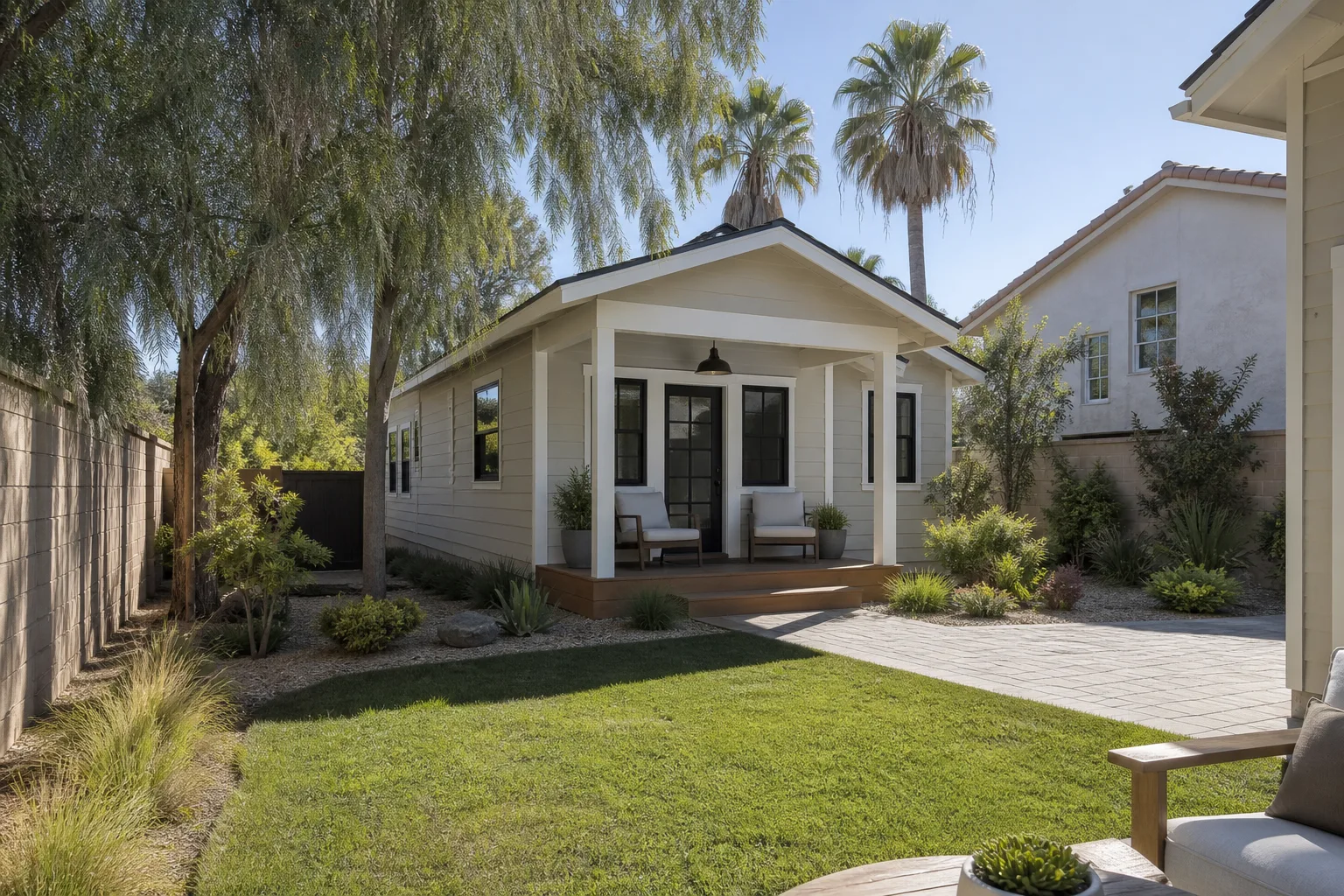
Every Tuff Shed installed in California sits on either a concrete slab, a set of concrete piers, or a compacted gravel pad with paver or concrete runners. The driveway and paver conversation matters most for the Premier Pro, Premier Tall Barn, and Garden series when they’re built on a paver or concrete apron that also serves as your driveway or work area. If your shed sits at the end of a driveway in the Wrigley area or tucked behind a garage in Belmont Heights, the pad and apron are doing double duty, and that’s where failures show up first.
Here’s a compatibility gotcha most owners discover too late: Tuff Shed’s foundation specs call for a 6-foot to 8-foot access apron in front of the doorway on most 10-foot and 12-foot-wide models. That apron is not optional. Without it, the paver lip at the threshold takes wheelbarrow traffic, motorcycle weight, and rain splash all at once, and it spalls or sinks within two or three seasons. We match the paver runner width to your shed opening exactly and recess the first course so the shed ramp or threshold plate sits flush instead of catching.
When it comes to OEM versus aftermarket for pavers, Tuff Shed doesn’t manufacture pavers, so there’s no official Tuff Shed paver to buy. What matters is spec: 60mm or 80mm thickness for any driveway that carries vehicle weight, a minimum 3,000 PSI for concrete pavers, and a base of at least 4 inches of compacted Class II road base under any area a car will park on. We stock Calstone, Belgard, and Basalite pavers in the Long Beach yard, all of which meet or exceed those specs, plus the edge restraints and permeable joint sand that keep the whole assembly from drifting.
Sawyer Remodel Long Beach is an independent service provider and not affiliated with Tuff Shed. We just know how their buildings sit on the ground and where the ground goes wrong.
Styles & brands we work with







Signs Your Tuff Shed Driveway & Pavers Is Failing
- Water pooling at the shed threshold after rain. You’re seeing a grade problem. The pad or apron has settled below the surrounding grade, and now every storm sends runoff toward your shed door instead of around it. We see this constantly in the Los Altos and Plaza neighborhoods where older driveways were poured flat or slightly toward the garage.
- Pavers rocking underfoot near the shed entrance. The sand bedding has washed out from underneath, usually because the edge restraint failed or was never installed. Each rocking paver is grinding against its neighbor, which means the surface is slowly self-destructing. One loose paver takes the locking sand with it, then the next one loosens, and you’ve got a cascade.
- Cracks running diagonally across the concrete apron. In Long Beach clay soil, diagonal cracks at the apron corners are almost always soil movement, not bad concrete. The ground under one corner dropped or heaved, and the slab cracked along the stress line. If the crack is wider than a quarter-inch or one side is visibly lower, water is getting in and the cycle accelerates every winter.
- The shed door drags or the ramp plate no longer sits flush. If the pad settled and the shed stayed put, you’ll see a gap between the bottom plate and the concrete, or the door will start sticking. That gap is a direct path for moisture, insects, and rodents into your shed. It also means the shed’s floor frame is now bearing unevenly.
- Pavers along the driveway edges crumbling or spreading outward. Edge failure, plain and simple. Without a proper soldier course and edge restraint pinned below the paver bottom, the outside row of pavers takes every tire that drifts a few inches wide and every rain event that softens the base edge. Once the edge goes, the field pavers start migrating and gaps open up.
See the difference
 Before
 After
After Before
 After
After Before
 After
AfterReplacement Cost & What’s Included
A paver driveway installation in Long Beach runs $7,000 to $18,000 with us, and the range comes down to three things: square footage, base depth, and paver grade. A concrete driveway replacement in this market sits at $4,500 to $12,000, while full driveway replacement work falls between $5,000 and $14,000, depending on whether we’re tearing out old asphalt, repairing the subgrade, or starting fresh from dirt. For a Tuff Shed apron tied into the driveway, budget on the lower end of those ranges if you’re doing 200 to 400 square feet.
Every number we hand you before work starts breaks down like this: tear-out and haul-off (if needed), base material and compaction, paver or concrete material, edge restraint and amendments, install labor, and finish grading with drainage. That’s the whole job. If we find something unexpected when we open the ground up, which happens now and then in older Long Beach neighborhoods where a previous owner buried a stump or a dead pipe, we stop and show you before spending another dollar. The price doesn’t change at the door. And the work carries our 365-Day Done Right Promise: if it’s not done right, we make it right, in writing, every time.
DIY or Call Us?
You can absolutely handle the investigative part yourself. Walk the perimeter of your shed pad and apron with a garden hose. Where does water run when you flood the surface? Where are the low spots? Mark them with chalk. Pull up one loose paver near the edge and look at what’s underneath. If the sand bed is damp and thinning, or if there’s no edge restraint at all, you’ve found the problem. That information helps us quote you accurately over the phone.
What you should not do is try to re-level a sunken paver field yourself. Re-screeding two hundred square feet of pavers means excavating the entire base, re-compacting in lifts, re-setting every paver, and re-installing edge restraint. Half of it goes wrong when the first lift of base isn’t compacted properly, and you won’t know until next winter when the whole thing moves again. For concrete aprons, saw-cutting and patching a settled slab just creates a future trip hazard. It’s the kind of work that looks fine for one season. Luca Romano has been on enough Long Beach job sites to know exactly when to pull the old base out and start fresh. The work tells you everything. The rest is just talking. Call (562) 512-6480 and we’ll come look at it, free.
FAQs
A properly installed paver driveway with a compacted Class II base should last 25 to 30 years in the Long Beach climate, though edge restraint and joint sand typically need refreshing every 5 to 7 years. The California sun breaks down joint sand faster than rain does, and the seasonal soil movement in our clay pockets shortens the lifespan of any paver run built without adequate base. Call (562) 512-6480 if your pavers are shifting before year five – that’s a base or edge failure, not normal wear.
Yes, in most cases we can saw-cut the failed area, re-compact the base, and re-set pavers in a localized repair that blends with the surrounding surface, especially when the failure is confined to the shed apron or one edge section. The catch is that patched areas on older paver fields sometimes read as slightly different in color because the surrounding pavers have been UV-bleached for years. If that matters to you, we’ll talk through it before we cut. For an exact quote, call us at (562) 512-6480.
Typical paver driveway replacements in Long Beach take 3 to 5 working days from demolition to final compaction, with concrete driveway work adding cure time of about a week before you can drive on it. Rain in our winter months will stretch the schedule, because you can’t compact a wet base and get it right. We’ll give you a day-by-day schedule before we start, and you’ll get photo updates as the job moves.
We keep Calstone, Belgard, and Basalite pavers, edge restraints, and joint sand in our Long Beach yard for immediate use, which means we don’t have to wait on a supplier to start most repairs. Since Tuff Shed doesn’t manufacture its own paver line, what matters is the spec matching: 60mm minimum thickness for foot traffic, 80mm for anything that carries cars, and 3,000 PSI minimum for concrete pavers. We carry both thicknesses. Call (562) 512-6480 and we’ll confirm we’re stocked for your project before we schedule the visit.
Written by Luca Romano, Owner, Sawyer Remodel Long Beach at Sawyer Remodel Long Beach, serving Long Beach and nearby areas.


