
Free written scope consultation - allowances, timeline, and change-order rules on paper before a single trade is scheduled
James Hardie Roofing: The Long Beach Owner’s Guide
If your James Hardie roof is cracking, warping, or leaking anywhere around Long Beach, here’s the straight answer: we stock James Hardie-compatible roofing parts locally, and installed replacement typically runs $800 – $2,500 depending on how much of the roof line is involved. Most repairs are done in a day once we confirm the part matches your existing profile. You’ll usually notice the problem after the first real rain of the season, or when the coastal morning fog gives way to sun and you spot a crack from the driveway that wasn’t there before.
The most common scenario we see in neighborhoods from Naples to Bixby Knolls is a failed underlayment seam or a cracked shingle at the roof’s edge where salt air and sun do their worst. You’ll see a water stain on the ceiling, or peeling paint near the fascia, or a section of siding that feels soft when you press on it. Sometimes it’s just an ugly black streak that turns out to be a cracked panel letting moisture sit where it shouldn’t.
Which James Hardie Models This Applies To
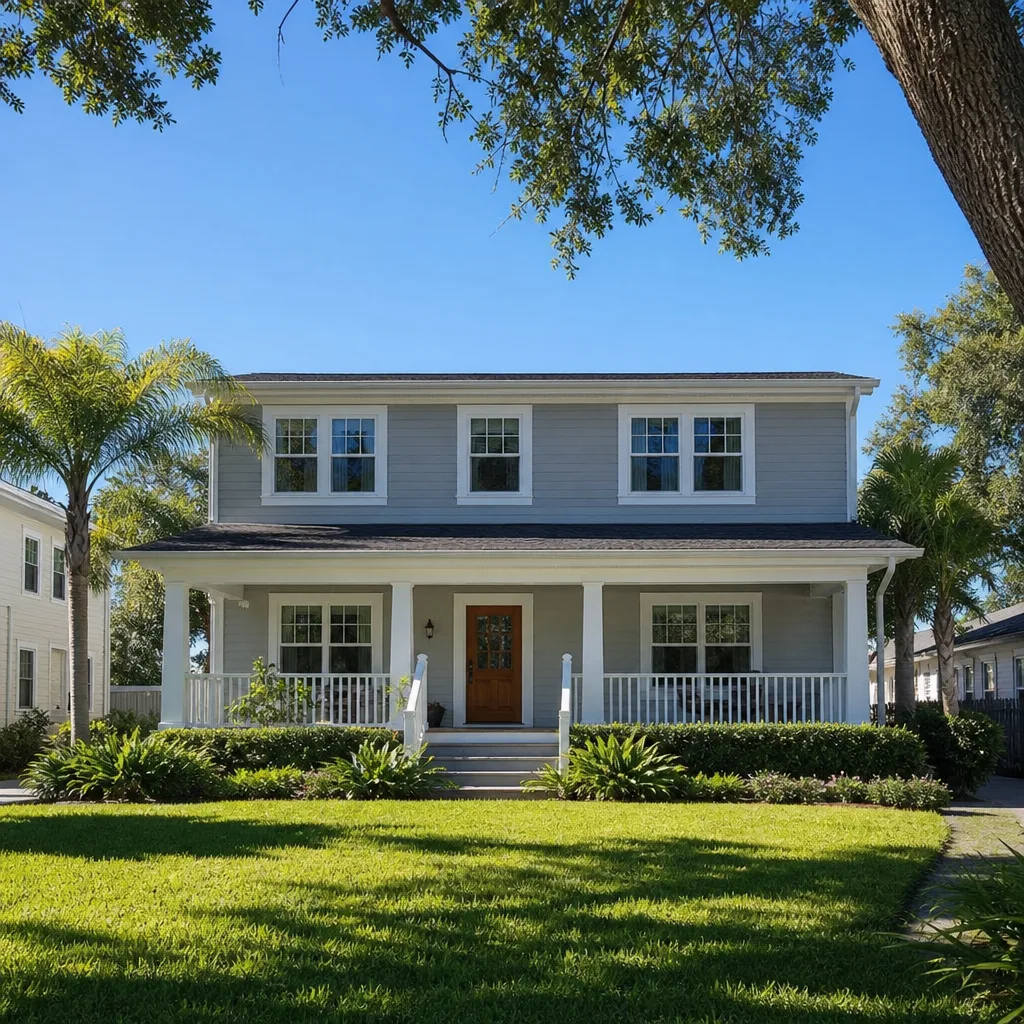
James Hardie doesn’t make a “roof” in the shingle sense. What it makes is fiber cement siding, trim, and soffit panels that overlap with roofing at the eaves, rake edges, and fascia. When a roofer or homeowner says “James Hardie roofing,” they’re almost always talking about HardieSoffit panels, HardieTrim boards at the roofline, or HardiePlank lap siding that meets the roof deck. The part you need depends on which of those is failing.
Here’s the compatibility gotcha most Long Beach owners hit: HardieSoffit comes in 12-inch and 16-inch widths, and the vented versus non-vented profile matters for attic airflow. If you replace a vented panel with solid, you just cut off your attic ventilation, which is how you get mildew in a beach climate. We always match the existing panel width and vent pattern, not whatever is on sale at the supply house. OEM Hardie panels carry a 30-year limited warranty on the material itself. Aftermarket equivalents exist, but we’ve seen color fade differently across brands within two summers of Long Beach sun, so unless the whole elevation is being redone, we spec OEM.
Styles & brands we work with







Signs Your James Hardie Roofing Is Failing
- Water staining on the ceiling near exterior walls. This is the classic first symptom. It usually means a soffit or fascia seam has opened up and rain is running behind the panel instead of off it. By the time the stain shows, the leak has been active for weeks.
- Cracked or chipped panels right at the roof line. Salt air plus direct afternoon sun makes the bottom edge of fascia and soffit panels brittle faster than any other spot on the house. A visible crack is an open path for moisture into the rafter tails.
- Peeling paint or bubbling caulk at the roofline. James Hardie panels hold paint well, but caulk doesn’t. When caulk fails, water gets behind the panel and pushes the paint off from the back. It looks like a paint problem. It’s a seal problem.
- Soffit panels sagging or pulling away from the framing. This is mechanical failure, not moisture. The original nails or screws have worked loose from years of coastal wind. Sagging panels leave gaps that birds and pests love, and they also mean the roof edge is no longer sealed.
- Black staining that widens after foggy mornings. A little environmental grime is normal in Long Beach. But a stain that grows and won’t wash off usually means the panel is holding moisture internally, which means the fiber cement matrix is starting to break down.
See the difference
 Before
 After
After Before
 After
After Before
 After
AfterReplacement Cost & What’s Included
For James Hardie roofing-adjacent work in Long Beach, expect $800 – $2,500 for a typical repair. That range covers removal of the failed panels, inspection of the underlying framing for rot, replacement of any damaged rafter tails or blocking, new OEM Hardie panels cut to match, caulk and paint to match the existing elevation, and cleanup.
What moves the price: how many panels are involved, whether we have to open the roof edge to get at damaged framing, whether your elevation color is still available or needs custom matching, and whether it’s a first-story or second-story reach. A single cracked soffit panel on a one-story bungalow near Retro Row is on the low end. A full fascia replacement around a two-story with hidden rot is the high end. Every quote is a written line-item price before any work starts, and it’s covered by our 365-Day Done Right Promise: if it’s not done right, we make it right, in writing.
DIY or Call Us?
You can safely do the diagnostic part yourself. Look at the roofline from the ground with a decent pair of binoculars. Note which panels are cracked, which seams look open, and whether you can see daylight through any soffit vents from inside the attic. That’s information that makes the repair faster.
The repair itself is a different story. Soffit and fascia work means working off a ladder at the roofline, often with your hands over your head for an hour at a time. It also means knowing how to cut fiber cement without cracking it, which is less forgiving than wood. We’ve cleaned up enough DIY soffit repairs in Long Beach to say plainly: the material isn’t what gets people, it’s the height and the awkward angle. Call (562) 512-6480 and we’ll send a background-checked tech in a uniform, with a live arrival time. Free estimate, no obligation.
FAQs
In Long Beach’s salt-air climate, expect 20 to 30 years from Hardie panels before they need replacement. The material warranty is 30 years, but coastal exposure on west-facing elevations accelerates edge deterioration. We replace a lot of original 1990s Hardie at the roofline right around the 25-year mark.
Small hairline cracks can be sealed and painted as a stopgap, but fiber cement doesn’t bond like wood, and any repair is temporary in our experience. A cracked panel at the roofline should be replaced because that crack is an active moisture path. Call (562) 512-6480 for an honest assessment, and we’ll tell you if a seal is actually viable or if replacement is the only real fix.
Most single-elevation repairs take one working day, including removal, any framing repair, installation, and paint matching. Multi-elevation work or structural rot in the rafter tails can stretch to two or three days. We schedule with a live arrival time and send photo updates before and after, so you can follow the whole job from your phone.
Yes. We carry common HardieSoffit profiles, both vented and non-vented, plus trim boards in the most common Long Beach colors. For less common profiles or custom color matches, we source OEM panels from our local supply partners, typically same-week. The written price you approve includes the material cost, so there’s no surprise markup at the invoice.
Written by Luca Romano, Owner, Sawyer Remodel Long Beach at Sawyer Remodel Long Beach, serving Long Beach and nearby areas.


