

Free written scope consultation - allowances, timeline, and change-order rules on paper before a single trade is scheduled
Quikrete Home Additions & ADU: The Long Beach Owner’s Guide
Quikrete home additions and ADUs in Long Beach typically run $45,000 to $130,000 fully permitted and built, depending on square footage, foundation type, and finish level. We install Quikrete-compatible slab systems, stem walls, and structural footings for room additions, garage conversions, and accessory dwelling units across Long Beach neighborhoods including Belmont Shore, Bixby Knolls, and Naples. The parts most likely to fail on a Quikrete-based addition aren’t the concrete itself; they’re the connection points: anchor bolts, sill plates, moisture barriers, and the rebar layout under the slab when drainage wasn’t handled right.
The usual discovery path goes like this: a homeowner in Long Beach notices a hairline crack running from the corner of the new slab, or a door that used to swing clean now rubs the frame. Sometimes it’s moisture wicking up through the baseplate after a heavy winter rain. By the time it’s visible, the issue has usually been developing for a season or two. This page tells you what failed, whether it’s worth fixing, and what a proper repair or rebuild costs in Long Beach.
Which Quikrete Models This Applies To
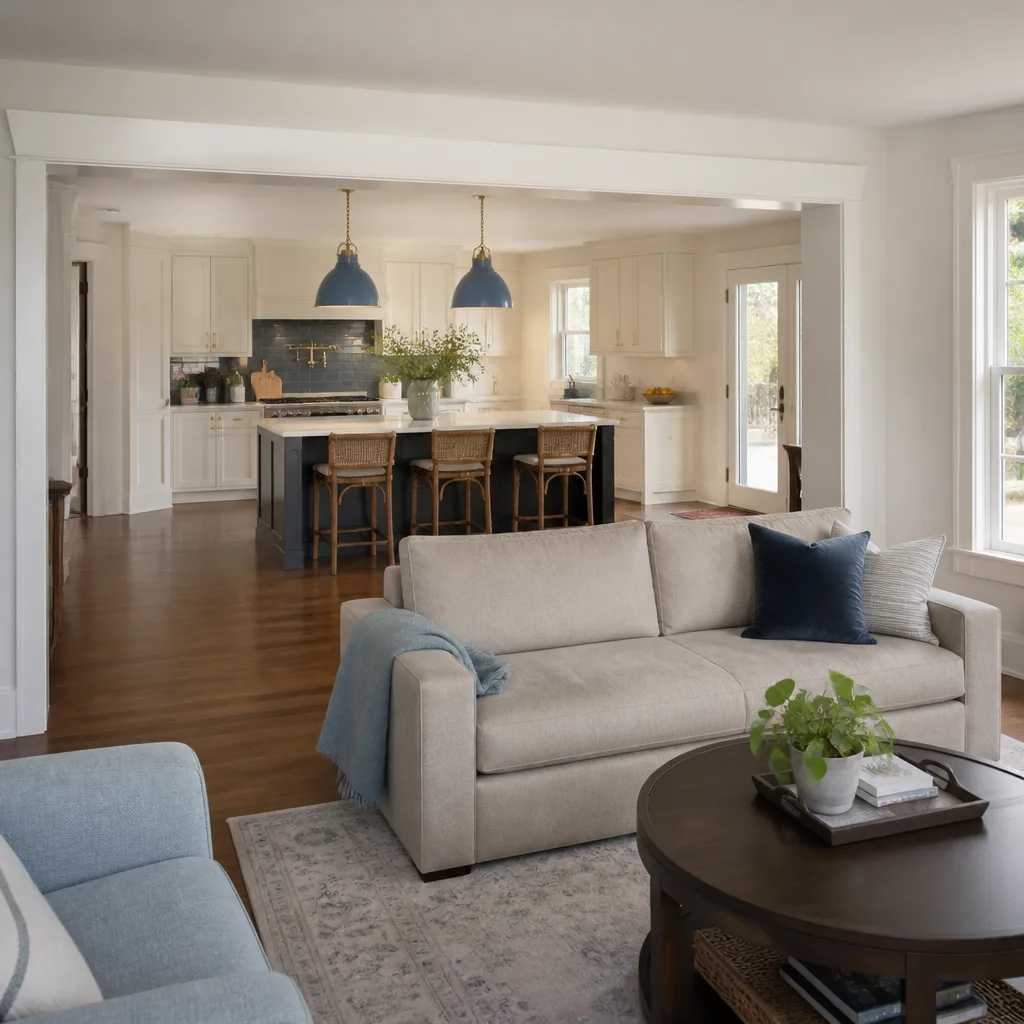
When we talk Quikrete on a home addition or ADU, we’re talking about the bagged concrete and stucco products used in the structural shell. That includes Quikrete 5000 (the 5,000 psi mix we spec for footings and stem walls in Long Beach’s expansive soil zones), Quikrete Crack-Resistant Concrete Mix for interior slabs where tile goes over top, and Quikrete FastSet for post anchors and gate footings. The compatibility gotcha most owners miss: Quikrete 5000 and standard Quikrete Concrete Mix are not interchangeable below grade. The standard mix is rated around 3,500 psi after 28 days of cure. Quikrete 5000 hits 5,000 psi and holds up better against the saline moisture that moves through soil near Alamitos Bay and the Los Cerritos wetlands. If a previous contractor poured standard mix under a load-bearing wall, that’s a problem waiting to show itself.
The bag print tells you what was used. Look for the PSI rating and the product code on the empty sack or the delivery invoice from the supplier. If the code starts with “1101” you’re looking at standard Quikrete Concrete Mix. Codes starting with “1007” are Quikrete 5000. That detail matters when we’re deciding whether to patch a footing or cut it out and repour. For aftermarket equivalents, we’ll sometimes use Sakrete 5000 Plus when the supply house is out of Quikrete at the Long Beach yard, but only with your sign-off and a written change order. The two products perform similarly, but if we quoted Quikrete, we install Quikrete unless you approve the swap in writing first.
Styles & brands we work with







Signs Your Quikrete Home Additions & ADU Is Failing
- Diagonal cracks from window or door corners running toward the slab. This usually means differential settling: one side of the footing dropped a quarter inch because the soil underneath wasn’t compacted before pour. Common in Long Beach’s older neighborhoods where fill dirt from the 1930s and 1940s finally gave way.
- Moisture staining or efflorescence on the bottom plate of exterior walls. The white chalky residue means water is moving up through the concrete and hitting the wood. The vapor barrier either failed or was never installed. Over time that sill plate rots, and suddenly the wall has no solid connection to the footings.
- Concrete spalling, chipping, or crumbling at the slab edge. Salt air near the coast accelerates surface decay. Quikrete slabs poured without an acrylic sealer near Belmont Shore or the Peninsula start to flake within three to five years. It’s cosmetic at first, structural if you ignore it long enough.
- Doors and windows in the addition that stick or won’t latch. That’s the structure telling you something moved. A slab that heaved slightly during a wet winter can shift a wall enough to throw a door out of square. The fix is rarely the door itself.
- Gaps opening between the addition and the original house. This is the big one. If you can slide a quarter into the seam where the new structure meets the old one, the addition is pulling away. That’s a footing or tie-in issue that needs a structural assessment fast, not a caulk-and-paint patch.
See the difference
 Before
 After
After Before
 After
After Before
 After
AfterReplacement Cost & What’s Included
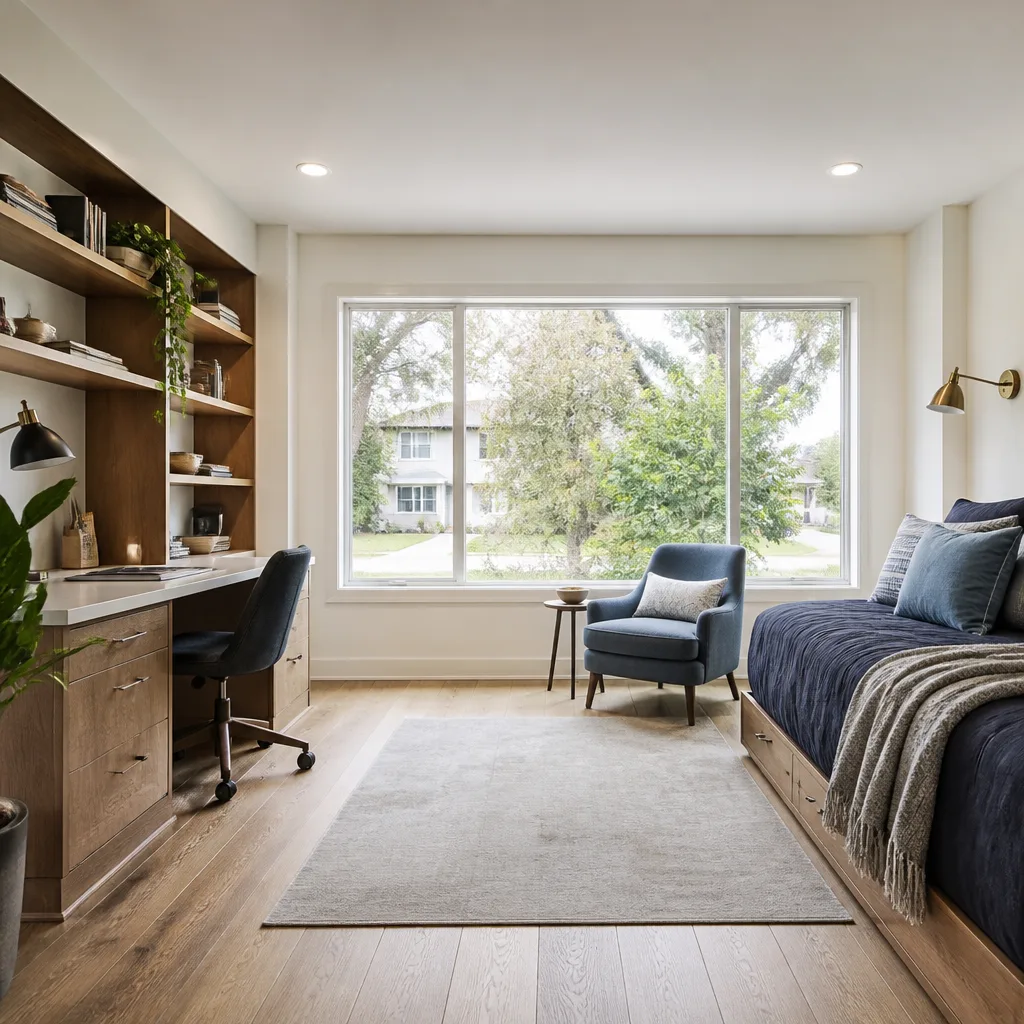
What you’ll pay depends on what failed. A full Quikrete home addition in Long Beach ranges $45,000 to $130,000 and includes demolition of the failed slab if needed, rebar and formwork per current code, Quikrete 5000 pour, finishing, curing, waterproofing, and the written permit sign-off from Long Beach Development Services. A partial slab repair (cutting out a cracked section and repouring) typically runs $3,000 to $8,000 depending on rebar condition and access. Sill plate replacement with new anchor bolts and seismic strapping runs $1,500 to $4,000 per wall section.
Every quote we write in Long Beach is a line-item price, not a lump sum. You’ll see exactly what the Quikrete materials cost, what labor runs, what the permit fee is, and what our workmanship warranty covers. And the number you approve is the number on the invoice. The Relay Visibility Guarantee applies on every project: written price before work starts, live arrival time, photo updates before and after, and a digital invoice you pay from a link. No change orders unless you approve them in writing first.
| Scope | Long Beach Installed Range |
|---|---|
| Full Home Addition (Quikrete slab, framing, finishes) | $45,000 – $130,000 |
| ADU Construction (permitted, turnkey) | $90,000 – $220,000 |
| Garage Conversion | $30,000 – $80,000 |
| Partial Slab Repair / Repour | $3,000 – $8,000 |
| Sill Plate & Anchor Bolt Replacement | $1,500 – $4,000 per section |
DIY or Call Us?
A homeowner can safely do a few things: photograph cracks monthly to see if they’re moving, check for moisture with a $15 concrete moisture meter, and verify that gutters and downspouts direct water away from the slab edge. That’s real, useful diagnostics. What you shouldn’t do is chip out concrete to “see what’s underneath.” If you hit a post-tension cable or under-slab utility line, you’re looking at a repair that costs ten times what the inspection would have. And working with curing concrete, rebar, and structural loads is not a weekend project. A badly repaired footing under a load-bearing wall in Long Beach is a liability waiting for the next earthquake.
The work tells you everything. The rest is just talking. If you’re seeing cracks, moisture, or separation on your Quikrete addition, call (562) 512-6480 and we’ll come look. Luca Romano has spent the better part of two decades building and repairing additions across Long Beach, from gut-renovated bungalows near Belmont Shore to kitchen overhauls a few blocks from the Queen Mary. The estimate is free and the advice is straight.
FAQs
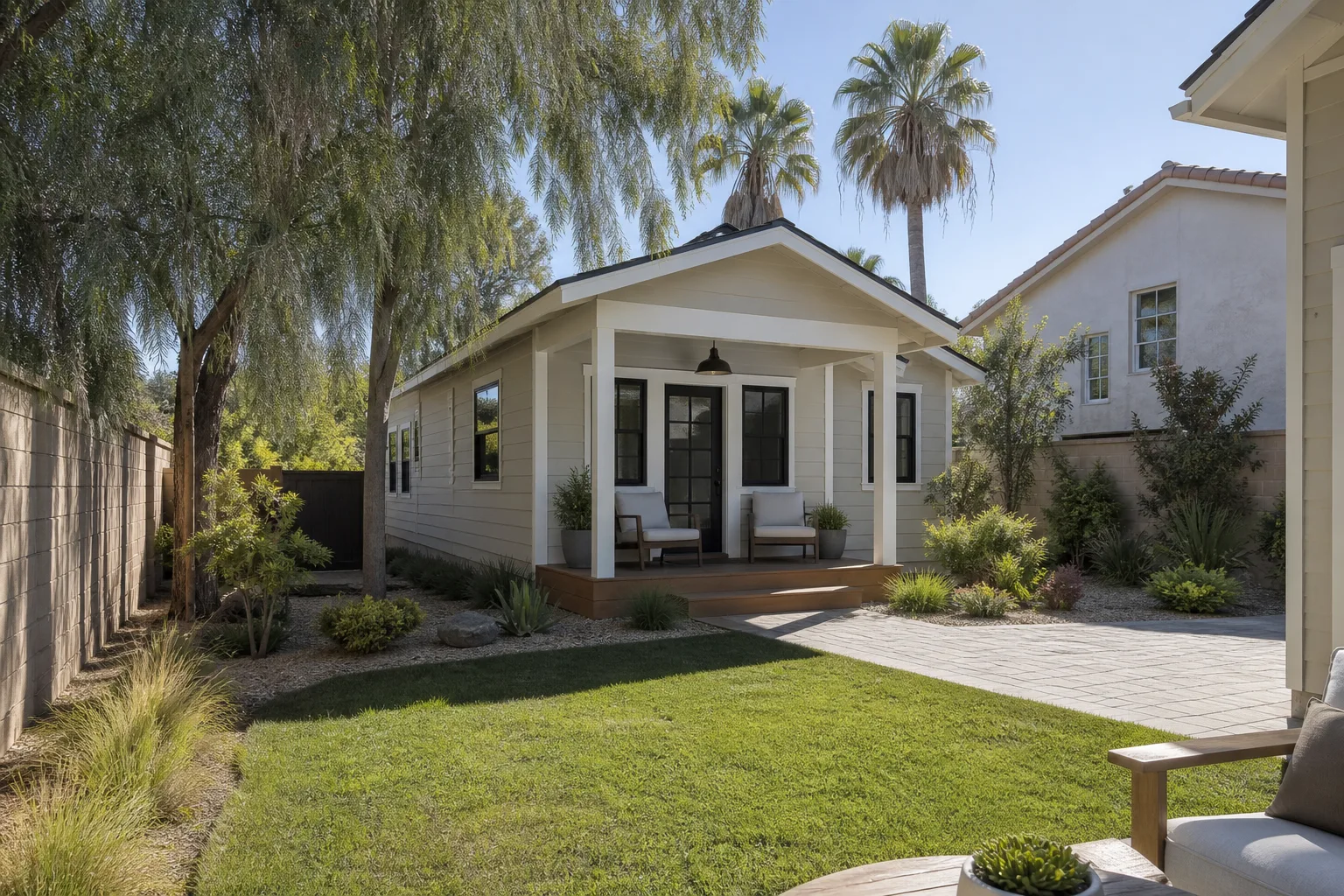
A properly poured and sealed Quikrete slab on a Long Beach addition should last 40 to 60 years before needing major work. The variables that shorten that lifespan around here are salt air near the coast, expansive soil movement in older neighborhoods, and missing or failed vapor barriers that let moisture attack the slab from underneath. If your slab was poured in the last five years and already shows spalling or cracking, something in the installation was off, not the Quikrete itself. Call (562) 512-6480 and we’ll tell you what we’re seeing after the free estimate.
Yes, if the crack is hairline (under 1/8 inch) and hasn’t shifted vertically, it can usually be epoxy-injected or sealed and monitored. If one side of the crack is higher than the other, or the crack runs under a load-bearing wall, you’re almost always looking at cutting out that section and repouring. The repair-versus-replace decision comes down to whether the rebar is still doing its job. We’ll tell you which one you need after we look at it.
A partial slab repair on a Quikrete addition takes two to four days including demolition, rebar, pour, and initial cure. A full slab replacement for an addition or ADU runs one to two weeks, with the concrete reaching walking strength in about three days and full structural strength at 28 days. We’ll give you the full schedule in writing before we start, and photo updates as the work moves.
We stock Quikrete 5000, Quikrete Crack-Resistant Concrete Mix, Quikrete FastSet, and Quikrete acrylic sealers on our trucks for Long Beach jobs. If your project needs something beyond those, we source from our Long Beach supply partners the same week, not the same month. We also carry materials for the surrounding systems: anchor bolts, vapor barriers, rebar, and sill plate lumber. Call (562) 512-6480 and we’ll confirm what’s on hand for your specific job.
Written by Luca Romano, Owner, Sawyer Remodel Long Beach at Sawyer Remodel Long Beach, serving Long Beach and nearby areas.


