


Free written scope consultation - allowances, timeline, and change-order rules on paper before a single trade is scheduled
Silestone Kitchen Remodeling: The Long Beach Owner’s Guide
Silestone kitchen remodeling in Long Beach typically runs $14,000 – $45,000 installed, depending on slab count, edge profile, seam placement, and whether we’re replacing cabinets at the same time. We stock and install Silestone-compatible countertop systems, and most mid-size kitchen overhauls take 2 – 4 weeks from template to final polish. The call usually starts the same way: a homeowner notices a hairline crack spreading from the sink cutout, or a seam has widened near the dishwasher, or the edge profile is chipped along the peninsula where the kids drop backpacks every afternoon.
Silestone is 90%+ quartz with polymer binders, so it doesn’t need annual sealing like granite, but the resin can scorch under a hot pan set directly on the surface, and sharp impact near narrow rails (the strip between sink and counter edge) is where we see the most failures in Long Beach kitchens. The good news: in most homes, the part that fails is a single slab section or an edge profile, not the whole layout. Matching a Silestone color batch is the tricky part, and that’s exactly where we spend our time getting it right.
Which Silestone Models This Applies To
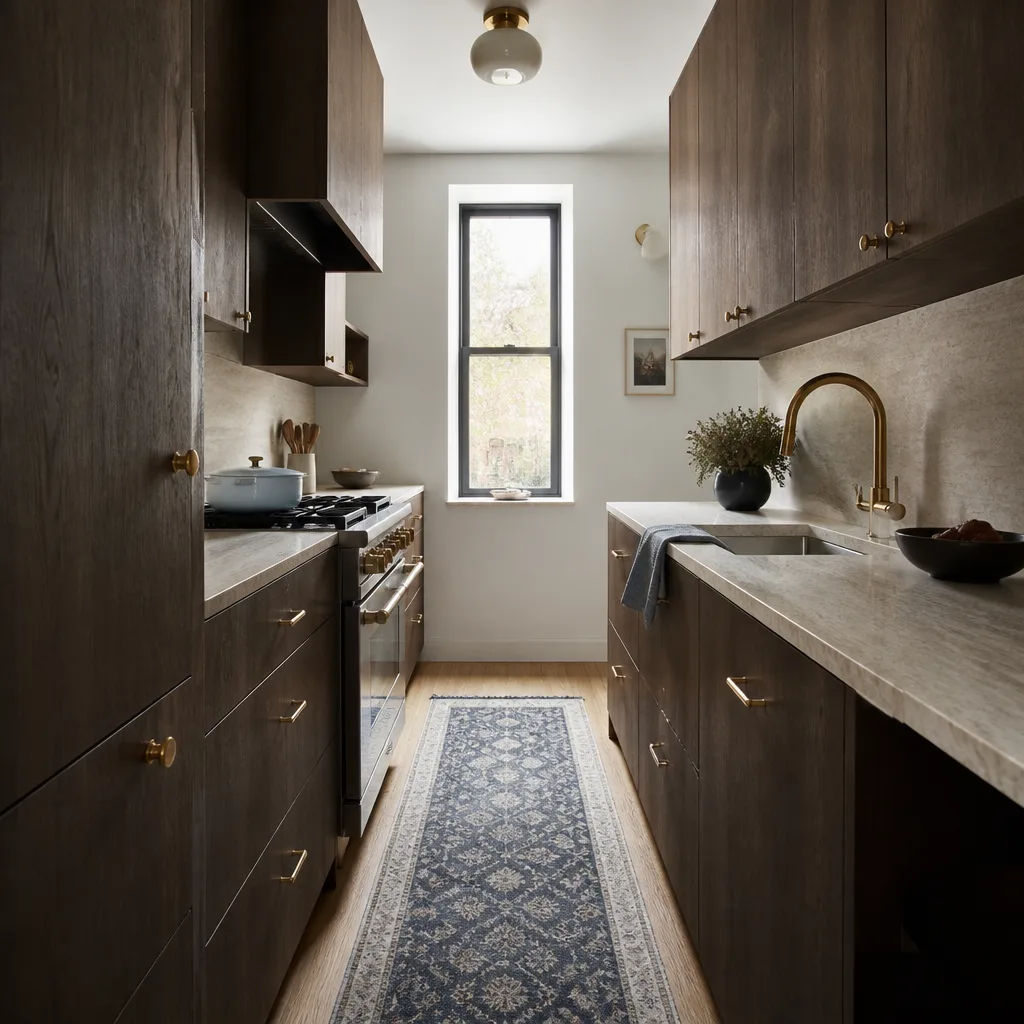
Silestone runs three main collections: the Classic series (colors like Blanco Zeus, Cemento Spa, and Negro Tebas), the Eternal series (Calacatta Gold and Eternal Serena, the marble-look lineup), and the Sunlit Days low-silica line that’s been gaining ground in newer Long Beach remodels. Every slab carries a printed ID on the back or the shipping sticker with the color name and lot number. If you don’t have that sticker anymore, measure the thickness (most Long Beach kitchens use 2 cm or 3 cm slab) and match the finish: suede, polished, or volcano.
The compatibility gotcha with Silestone is lot-to-lot color drift. Two slabs of “Blanco City” ordered six months apart can sit a shade apart under the same LED under-cabinet lighting. When we’re replacing one run of countertop rather than the whole kitchen, we order a sample set against the existing slab before cutting begins. For OEM versus aftermarket, Silestone doesn’t sell “parts” the way an appliance brand does, so aftermarket means a fabricator-matched slab section from the same color family. That works about 80% of the time. The other 20%, we recommend replacing the full run so the seam doesn’t read as a patch.
One more Long Beach note: homes near the water in Naples and Belmont Shore deal with more humidity and salt air than inland neighborhoods like Bixby Knolls or Los Altos. That doesn’t hurt Silestone itself, but it corrodes the sink clips and undermount adhesive over time. We’ve replaced plenty of sinks that were still in great shape because the Silestone held and the hardware below didn’t.
Styles & brands we work with







Signs Your Silestone Kitchen Remodeling Is Failing
- A hairline crack radiating from the sink cutout. Sink rails are the thinnest section on most slabs, and a garbage disposal that vibrates hard or a pan dropped into an undermount sink sends stress straight through that weak point. Once started, the crack travels.
- A seam that’s widened or yellowed. Polyester-based adhesives dry out and shrink over years of heat cycling from the dishwasher. A seam that catches a fingernail is a seam that’s about to let water in.
- Chipped edges along the peninsula or island overhang. Silestone is hard, not indestructible. Bar stools, cast iron pans, and ceramic dishes hit the leading edge, and the polished returns on a mitered edge are the first to chip.
- A dull, hazy patch where a hot pan once sat. The resin binder scorches around 350°F sustained. The quartz won’t burn, but the surface turns milky and won’t polish back out.
- Countertop pulling away from the wall or sink rim. This is usually the adhesive failing from water intrusion at the backsplash seam. Left alone, the slab can shift enough to crack under its own weight.
See the difference
 Before
 After
After Before
 After
After Before
 After
AfterReplacement Cost & What’s Included
In Long Beach, a single Silestone slab section replacement runs $2,000 – $6,500 installed, while a full kitchen countertop overhaul lands between $9,000 and $20,000 depending on square footage, edge profile, and how many seams the layout needs. A complete kitchen remodel that includes Silestone tops, cabinetry, backsplash, and an island runs $14,000 – $45,000.
What’s included with our work: demolition and haul-away of the old surface, template and digital measuring, slab fabrication, sink cutout and undermount installation, seam setting and color-matched adhesive, edge profile work, backsplash if you want it, and a written line-item quote before anything gets cut. We don’t do change orders mid-project. The number you approve is the number on the invoice.
Every Silestone remodel we install carries our 365-Day Done Right Promise: if something isn’t done right, we make it right, in writing, before we leave the first day. If a seam opens or an edge chips within a year, the fix is covered. No argument.
DIY or Call Us?
You can wipe the surface with a damp cloth and pH-neutral cleaner. You can check that your sink clips are tight and the caulk line at the backsplash isn’t cracked. Beyond that, quartz slab work is not a homeowner job. Lifting a 3 cm slab without suction cups and a crew puts your back, your cabinets, and the slab itself at risk. A 2-person lift on a peninsula section that weighs 180 pounds ends badly almost every time it’s attempted.
If you’re thinking about filling a chip with an epoxy repair kit, the photos online look better than the results. The color never matches, the repair reads under raking light, and now the fabricator has to grind out the DIY patch before doing the real fix. That costs more than the original chip would have. Call us at (562) 512-6480 and we’ll take a look, give you a written price, and tell you honestly whether that chip is worth repairing or leaving alone.
FAQs
20 – 30 years under normal use, longer if the homeowner never puts a hot pan directly on it. The quartz itself doesn’t degrade, but the resin binder yellows slightly over decades of UV exposure near windows, and adhesives under the sink rim typically fail before the slab does. In our Long Beach remodels, we see most replacements happen because the kitchen layout changed, not because the Silestone wore out.
Small chips can be ground and polished by a fabricator for a few hundred dollars. A crack through the slab cannot be reliably repaired; any adhesive fill will show and will eventually reopen as the slab flexes with temperature swings. If the crack is in a low-visibility area and not near water, sometimes the honest answer is to leave it. Call (562) 512-6480 and we’ll tell you which situation you have.
For a single slab section replacement, 3 – 5 business days from template to installation. For a full kitchen countertop, 2 – 4 weeks depending on how many slabs and whether we’re also doing the island or backsplash. The template visit takes about an hour. Fabrication happens off-site. Installation day runs 4 – 8 hours.
We work directly with regional Silestone distributors and keep a rotating inventory of popular Long Beach colors in our slab yard, including several of the Eternal marble-look colors and the cement-grey Classics that show up in most Bixby Knolls and Cal Heights remodels. If your color isn’t in stock, we can usually have it templated and in fabrication within a week. We also carry Cambria and Caesarstone for homeowners who want to compare, plus KraftMaid cabinetry and Kohler fixtures so the whole kitchen comes together from one written estimate.
Written by Luca Romano, Owner, Sawyer Remodel Long Beach at Sawyer Remodel Long Beach, serving Long Beach and nearby areas.


