
Free written scope consultation - allowances, timeline, and change-order rules on paper before a single trade is scheduled
Sterling Home Additions & ADU: The Long Beach Owner’s Guide
Planning a Sterling home addition or ADU in Long Beach typically runs $45,000 to $130,000 installed, depending on square footage, foundation work, and finish level. Most Long Beach homeowners reach out to us after their initial planning hits a wall, whether that’s a setback question on a Belmont Shore lot, a foundation issue in a 1920s bungalow near Retro Row, or figuring out how to squeeze an ADU into a Wrigley backyard with an aging garage. The good news: if your Sterling project has stalled, the fix usually isn’t the product, it’s the planning and execution around it. We handle that end to end.
Quick note before we dig in: Sawyer Remodel Long Beach is an independent contractor. We’re not affiliated with Sterling, but we install and build around their product lines constantly, so we know the quirks.
Which Sterling Models This Applies To
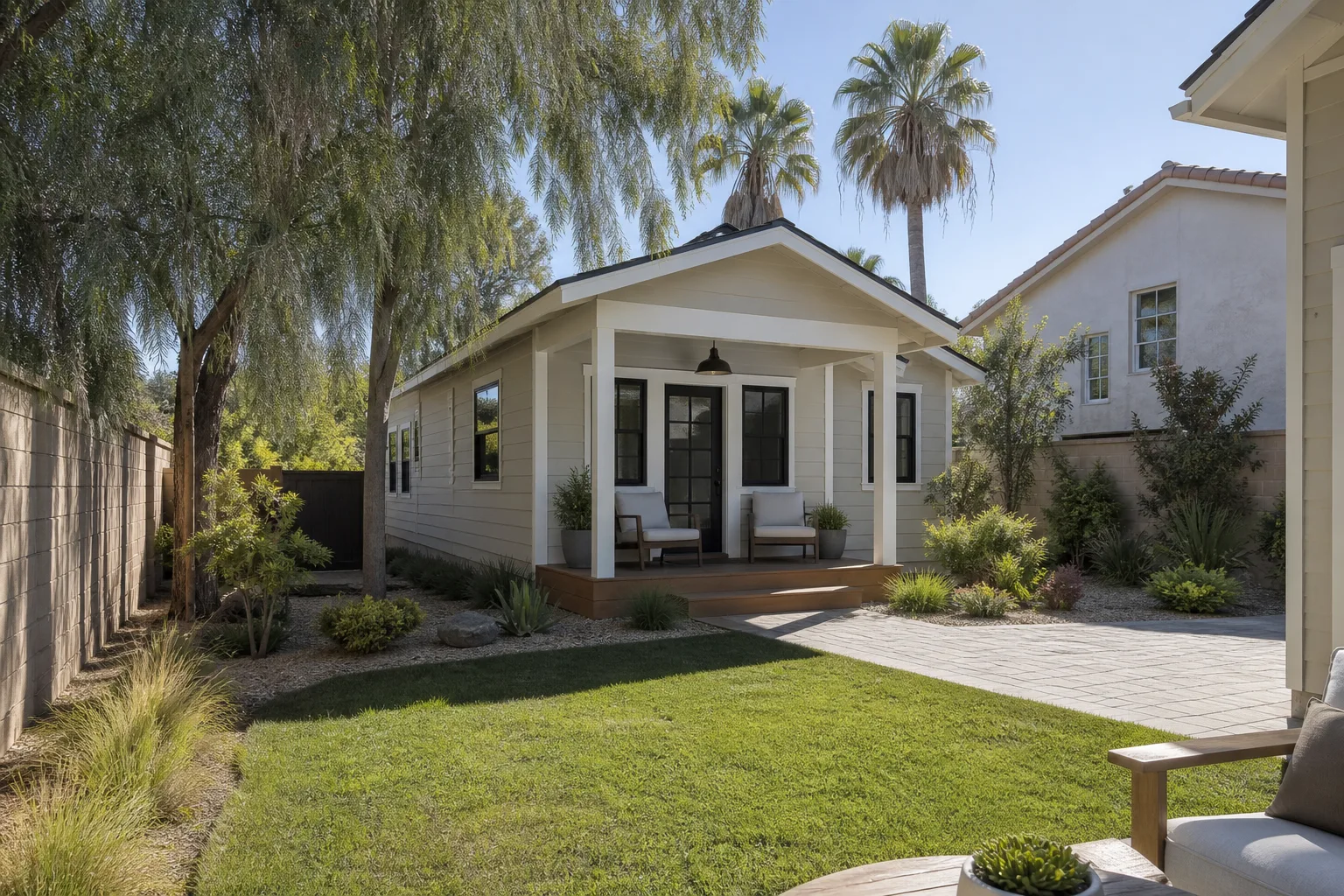
Sterling’s home addition and ADU product lines cover pre-engineered panel systems, modular room packages, and detached ADU shells. In Long Beach, the most common builds we see are the Sterling Accessory Dwelling Unit kits (typically 400 to 1,200 square feet) and their bump-out room additions, usually 200 to 600 square feet tied to an existing single-family home.
Here’s the compatibility gotcha most people miss: Sterling panel systems are engineered for specific wind and seismic load ratings. Long Beach sits in Seismic Design Category D, and coastal neighborhoods like Naples and the Peninsula get wind exposure that inland neighborhoods like Bixby Knolls don’t. A Sterling panel spec’d for a low-seismic zone will not pass Long Beach plan check without supplemental engineering. Before you buy a shell or pay a deposit, match the load rating to your exact address. If you already bought it and the city flagged it, we can typically reinforce the structure without scrapping the entire kit.
OEM versus aftermarket for Sterling projects is less about parts and more about connectors, fasteners, and flashing. The panel kits ship with basic hardware. In Long Beach’s salt air, especially west of the 710, that hardware corrodes faster than you’d think. We spec upgraded Simpson Strong-Tie connectors and stainless fasteners on every coastal project. It costs a few hundred dollars more and prevents callbacks five years later.
Styles & brands we work with







Signs Your Sterling Home Additions & ADU Is Failing
- Doors and windows that stick or won’t latch. This usually means the foundation is moving. Sterling shells are built square, so if the openings are racking, the pad or stem wall underneath wasn’t compacted or cured properly. We see this most in Long Beach’s expansive clay soil, particularly in the Los Altos and El Dorado Park areas where older lots have decades of irrigation history.
- Visible cracking at panel seams. Hairline cracks are cosmetic. Cracks wider than a quarter inch at the seam lines, especially above windows, mean the structure is flexing. In a seismic zone, that’s not a cosmetic problem, it’s a warning sign.
- Moisture or paint bubbling on interior walls. Failed flashing where the addition meets the existing house is the usual culprit. Long Beach gets real rain a few weeks a year, and when it comes, it finds every bad seam. The fix is pulling the exterior skin, re-flashing the transition, and re-taping. It’s a two- to three-day job if caught early.
- Soft spots in the floor near exterior walls. This points to a leak at the sill plate or door threshold. In a Sterling addition, the sill detail is critical. If water gets under the panel, it wicks up and rots the bottom track. By the time you feel a soft spot, you’re replacing subfloor, not just drying things out.
- Uneven heating or cooling between the addition and the main house. Sometimes it’s an undersized HVAC tie-in. Other times, it’s missing insulation in the panel cavities. Long Beach’s temperature swings near the coast are mild, but inland areas like North Long Beach hit the 90s in summer. A poorly insulated Sterling addition turns into an oven by 3 p.m.
See the difference
 Before
 After
After Before
 After
After Before
 After
AfterReplacement Cost & What’s Included
Here’s the straight answer on what Long Beach pricing looks like for a Sterling project done right:
- Sterling room addition (200 – 400 sq ft): $45,000 – $75,000
- Sterling room addition (400 – 600 sq ft): $60,000 – $95,000
- Sterling ADU kit (400 – 800 sq ft, detached): $90,000 – $175,000
- Sterling ADU kit (800 – 1,200 sq ft, detached): $140,000 – $220,000
- Structural reinforcement for failed or under-spec’d panels: $8,000 – $25,000 depending on scope
What drives the range in Long Beach: foundation type (pier and beam on a 1920s lot costs more than a slab on grade), seismic engineering requirements, trash and access logistics (an alley-loaded Wrigley lot is tighter than a Naples street-front), and finish level. A Sterling shell with builder-grade finishes lands at the low end. Custom cabinetry, tile, and exterior detailing push it up.
Our price for a Sterling project includes the structural work, city plan check and permit package, all electrical and plumbing rough and finish, drywall, paint, and a one-year written warranty. You get the price before we start, and the number on the invoice is the number you approved. That’s The Relay Standard, and it applies to every Sterling job we take in Long Beach.
DIY or Call Us?
You can absolutely do your own homework before calling. Check your property’s zoning designation on the city’s zoning map. Look up your parcel’s setback requirements. Measure your existing foundation depth. Those steps save time and give you a realistic picture of what Long Beach will allow.
But assembling and installing a Sterling shell is not a weekend project. These are engineered structures. The panels are heavy, the lifting is dangerous, and the tie-down requirements in a seismic zone are not optional. We’ve been called to fix more than one homeowner-assembled kit that failed rough-in inspection because the panel connections didn’t match the engineered drawings. By the time we arrive, they’ve spent twice what they saved. If you’re in Long Beach and your Sterling project needs to actually get finished, call us at (562) 512-6480 before you pick up a hammer. The work tells you everything. The rest is just talking.
FAQs
A properly permitted and installed Sterling structure should last 50 years or more, with the same maintenance as any wood-framed addition in coastal California. The weak points are flashing, sealants, and hardware in salt air, which need attention every 10 to 15 years. Call (562) 512-6480 if you want us to inspect an existing Sterling build.
Most failed Sterling additions can be repaired without full teardown. The repair usually involves adding shear reinforcement, replacing corroded connectors, re-flashing seams, and re-leveling the foundation. Teardown is only necessary when the panel cores are compromised by prolonged water intrusion. Call (562) 512-6480 and we’ll tell you honestly which path applies to your build.
A small room addition typically takes 8 to 12 weeks from permit approval to final inspection. A detached ADU runs 4 to 6 months. Plan check with the city of Long Beach adds 4 to 10 weeks on top of that, depending on how complete your submittal package is. We handle the permit package so that clock doesn’t restart.
We stock the fasteners, Simpson connectors, flashing, and sealants needed for Long Beach coastal conditions, plus we maintain relationships with Sterling distributors for panel-specific trim and replacement components. We also regularly work with KraftMaid, Cambria, and Silestone for interior finish work on these projects. Call (562) 512-6480 and we can usually confirm material availability within 24 hours.
Written by Luca Romano, Owner, Sawyer Remodel Long Beach at Sawyer Remodel Long Beach, serving Long Beach and nearby areas.


