
Free written scope consultation - allowances, timeline, and change-order rules on paper before a single trade is scheduled
Unilock Fence Installation: The Long Beach Owner’s Guide
Unilock fence installation in Long Beach typically runs $3,500 to $9,000 for a complete run, depending on linear footage, existing wall or post conditions, and whether we’re working with Unilock pillar caps, fence panels, or a full freestanding system. Most owners call us after a panel cracks at the post base or a pillar cap loosens and starts rocking. The short version: we carry Unilock-compatible fence components, we price the job in writing before we cut anything, and if the install isn’t done right, the 365-Day Done Right Promise covers the fix.
Here’s the scene we hear most often: you’ve got a Unilock fence that’s been standing for years, maybe around a front courtyard near Bluff Heights or along a property line off Stearns Street. One Monday you notice a panel has shifted about half an inch, or a cap stone is no longer seated flush. Then the neighbor’s dog finds the gap. That’s when it stops being cosmetic and becomes a call you make that afternoon.
Which Unilock Models This Applies To
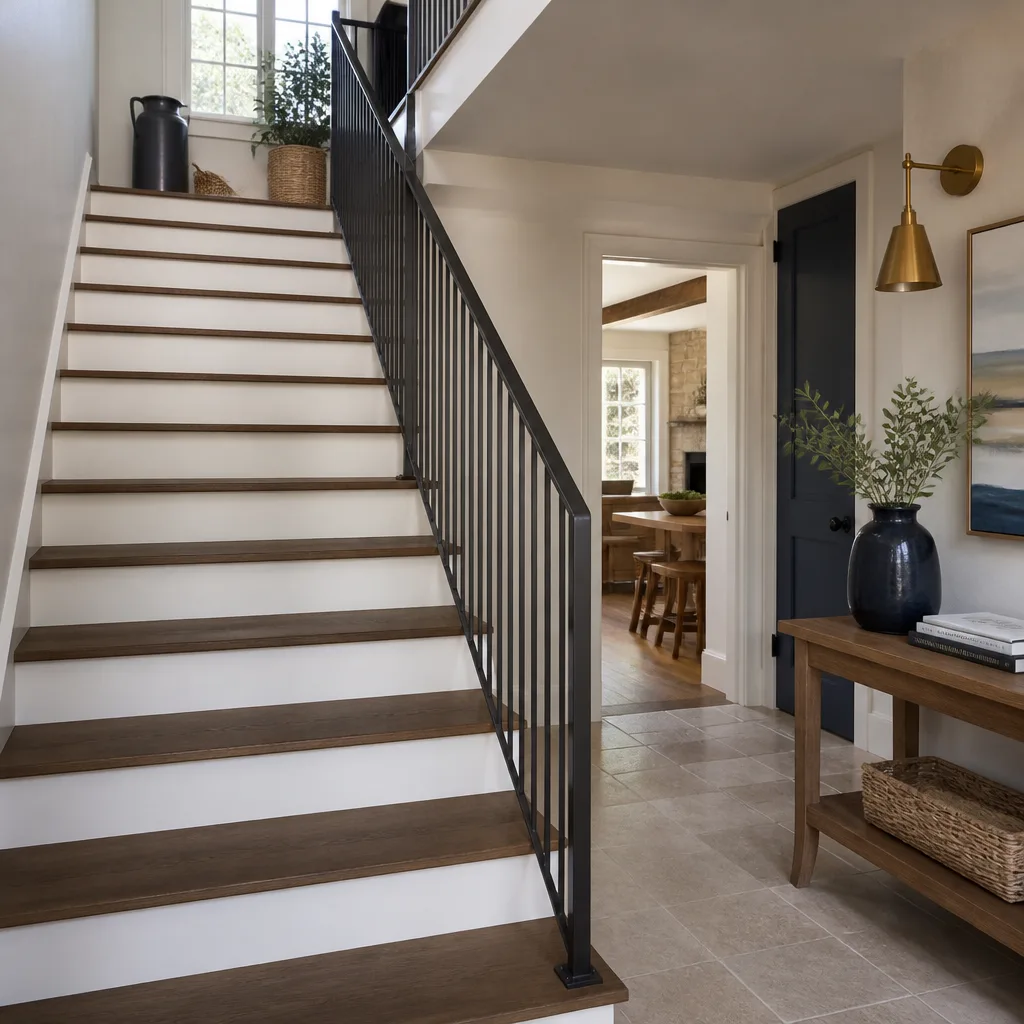
Unilock fence systems are built around concrete interlocking components, not wood posts and pickets. The most common setups we service in Long Beach include the Estate Wall system, pillar-and-panel combinations, and freestanding screen walls built from Unilock’s dimensional concrete units. The parts we’re matching include wall caps, pier caps, fence panels, corner units, and adhesive. Unilock makes these in specific dimensional series, so a cap from one line will not seat correctly on units from another. That’s the compatibility gotcha we see most: someone buys a “Unilock cap” on a resale site, but it’s from a different series with a different overhang dimension, and it sits crooked or overhangs half an inch on one side.
How to identify what you have: look for the Unilock stamp on the underside of a cap or the back face of a panel. Most units from the last decade have a mold code pressed in. If you can’t find it, measure the overall width, the tongue or lip depth, and the surface texture. Unilock’s tumbled and smooth finishes vary by series, and matching the texture matters as much as matching the size. On the OEM-versus-aftermarket question: for Unilock fence panels and caps, we recommend genuine Unilock or a series-matched equivalent because aftermarket generics rarely match the aggregate color, the edge profile, or the UV fade pattern. In Long Beach sun and salt air, a mismatched panel shows up as a different shade within one season. Sawyer Remodel Long Beach is an independent contractor, not a Unilock dealer, but we’ve been matching these systems long enough to know what works and what doesn’t.
Styles & brands we work with







Signs Your Unilock Fence Installation Is Failing
- Leaning or tilting posts. The most common failure we see. Coastal moisture works into the bond between course layers, and a post that wasn’t cored and filled correctly starts to lean. Once it moves five degrees, the panels start torquing against each other.
- Rocking or loose cap stones. Cap adhesive breaks down after years of thermal cycling. A loose cap on a pier isn’t dangerous by itself, but water gets into the open joint and accelerates freeze-thaw damage during the rare Long Beach cold snaps.
- Cracked panels at the post connection. This is usually a joint that was mortared too rigidly. Concrete moves, the mortar doesn’t, and the panel cracks where it’s pinned. We see this often on fences poured directly against a driveway slab without an expansion joint.
- Discolored or spalling surface. Salt air from the harbor does this. Units near Naples or the Peninsula take more airborne salt than inland neighborhoods, and once the surface starts flaking, water intrusion follows.
- Gaps opening between panel sections. Ground settlement is the culprit. Long Beach sits on a mix of sandy loam and, in some pockets, fill. Panels don’t fail; the base under them shifts, and the panels separate.
See the difference
 Before
 After
After Before
 After
After Before
 After
AfterReplacement Cost & What’s Included
Complete Unilock fence installation in Long Beach runs $3,500 to $9,000 for a typical residential run of 30 to 60 linear feet. Shorter repair jobs, like resetting two posts and replacing one cracked panel plus caps, usually fall in the $1,800 to $3,500 range depending on how much of the original base is salvageable. The range is driven by linear footage, post condition, whether we’re reusing existing sound panels or replacing everything, and site access. A fence along a narrow side yard in Belmont Heights costs more to build than one in a wide backyard in Bixby Knolls because every unit has to be walked in by hand.
- Parts: Unilock-compatible fence panels, caps, corner units, and construction adhesive.
- Labor: Demo of failed sections, base prep, leveling, installation, and post capping.
- Base work: Compacted aggregate base, which is the part that prevents the “panels separating” failure described above.
- Warranty: Every job carries the 365-Day Done Right Promise in writing. If it isn’t done right, we make it right, for a full year after the project closes.
- Pricing guarantee: The written price you approve before work starts is the price you pay. No change orders unless you add scope.
DIY or Call Us?
You can safely do a few things before calling: check whether caps are loose by pressing on them (don’t pry, just test for movement), note where panels are separating, and snap photos with a tape measure for reference. What you shouldn’t do is pull a panel out to “see what’s underneath.” Fence panels interlock under tension in some Unilock configurations, and a panel that comes loose at the wrong angle can drop and break a foot or hand. Full sections are heavy, often over 80 pounds. If a post is leaning, the base under it has shifted; re-stacking it without re-compacting the base means it will lean again within a year.
The honest split: cleaning, inspecting, and documenting are owner-level jobs. Resetting posts, re-bonding caps, and replacing cracked panels are crew-level jobs. If you want a number before you commit to anything, call (562) 512-6480 and we’ll come out and price it. Luca Romano walks the longer jobs himself, so you’ll get a straight read on what failed and why.
FAQs
A properly installed Unilock fence with a compacted base lasts 25 to 40 years in Long Beach’s climate. The concrete units themselves don’t fail; the base and adhesive are what give out first, usually at the 15 to 20 year mark if the original install cut corners on base prep. Call (562) 512-6480 for an exact assessment of your fence.
Yes, in most cases. If the panels are sound and the issue is a leaning post, a loose cap, or a separating joint, we repair the failed section and leave the rest alone. Full replacement only makes sense when multiple panels are cracked or the base has degraded across the entire run.
A typical repair job with one or two posts reset and a panel swapped takes one day. A full fence run of 40 to 60 linear feet takes three to five days including base prep and cleanup. We’ll give you the schedule in writing before work starts.
We carry the most common Unilock-compatible caps, corner units, adhesive, and base material on our trucks. For specific panels or uncommon series, we source from local Long Beach suppliers the same week. We’ll confirm the exact lead time for your parts during the estimate.
Written by Luca Romano, Owner, Sawyer Remodel Long Beach at Sawyer Remodel Long Beach, serving Long Beach and nearby areas.


