
Last updated October 16, 2026

Free written scope consultation - allowances, timeline, and change-order rules on paper before a single trade is scheduled
Construction Cost Breakdown: The Long Beach Homeowner’s Reference for 2026
National remodeling cost guides peg a bathroom remodel at “$10,000 – $35,000” – a range so broad it tells you nothing. In Long Beach in 2026, a mid-grade full bathroom remodel in a 1950s bungalow has a tighter, more predictable cost structure that you can actually budget against. Long Beach labor rates run 18 – 25% above the national average, permit fees scale with your project valuation in ways that catch people off guard, and older homes here carry specific upgrade requirements that generic calculators never mention. This guide breaks down the real numbers: line items, permit schedules, labor rates, and the hidden costs of older Long Beach housing stock.
Quick Answer
A full mid-grade bathroom remodel in Long Beach in 2026 runs $22,000 – $38,000 depending on size and existing conditions; a mid-grade kitchen runs $45,000 – $85,000; an ADU conversion runs $180,000 – $320,000. Permit fees add 3 – 6% of your project valuation on top of construction costs. The single biggest variable in older Long Beach homes is what’s hiding behind the walls: cast iron drains, outdated electrical panels, and asbestos in pre-1980 builds.
Styles & brands we work with







Table of Contents
- Long Beach Labor Rates vs. National Benchmarks
- Long Beach Permit Fees: The 2025 – 2026 Schedule
- Line-Item Cost Breakdown by Project Type
- Hidden Costs in Older Long Beach Homes
- The True Cost of the Cheapest Bid
- How to Read a Written Estimate
- Material Pricing: Where Long Beach Supply Chains Add Cost
- How Long Projects Actually Take in Long Beach
Long Beach Labor Rates vs. National Benchmarks
National remodeling averages assume a labor market where skilled trades charge $45 – $65 per hour. Long Beach in 2026 operates at $65 – $95 per hour for licensed, insured crews. That gap is not contractor greed; it’s the cost of doing business in a coastal California city where workman’s compensation insurance runs 40 – 60% higher than the national baseline, and where a journeyman carpenter’s prevailing wage on public works projects sets a floor that private residential work has to compete against.
What this means for your project: a bathroom remodel that takes 220 labor hours will cost roughly $15,400 – $20,900 in labor alone in Long Beach, compared to $9,900 – $14,300 in, say, Phoenix or Dallas. The national guides are not wrong; they’re just not written for postal codes starting with 908.
- General remodel labor: $65 – $85 per hour (skilled carpenter, drywall, finish work)
- Licensed plumber: $95 – $140 per hour, often with a 2-hour minimum
- Licensed electrician: $90 – $130 per hour
- Tile setter: $55 – $85 per square foot for shower surrounds and bathroom floors
- Demo crew: $45 – $65 per hour. Demo is where low-ball bids hide; proper dust containment and lead-safe protocols add real time.
We’ve seen multiple Long Beach homeowners budget off a national guide, subtract 20% for “negotiation,” and end up with a project that stalls halfway through because the money ran out. The labor number is the number. Budget for it. If you are planning a larger project, a General Contractor in Long Beach who manages multiple trades can sometimes bring labor costs down through scheduling efficiency, but the hourly rates themselves do not move much.
Long Beach Permit Fees: The 2025 – 2026 Schedule
Long Beach building permit fees scale with project valuation. The city calculates your valuation from the scope of work, then applies a fee schedule that most homeowners never see until the permit is pulled. The piece that catches people off guard is the plan check fee, which is separate from the building permit fee and is typically 65 – 75% of the building permit amount, even for simple remodels that require plan review.
Here is how the math works on a $30,000 bathroom remodel in Long Beach in 2026:
- Building permit: $450 – $650 (based on valuation and scope)
- Plan check fee: $290 – $420 (separate line item, not a credit toward the permit)
- Electrical permit: $180 – $350
- Plumbing permit: $160 – $320
- Mechanical permit (if moving HVAC): $140 – $280
- Total permit cost: $1,220 – $2,020, or roughly 4 – 7% of project valuation
On a whole-home renovation valued at $120,000, permits run $4,800 – $8,400. On an ADU conversion valued at $220,000, expect $9,000 – $14,000 in permit and plan check fees before a single piece of lumber is delivered. The city also charges separate fees for sewer lateral compliance certificates if your work touches the main drain line, which is common in homes built before 1970.
A Home Renovation in Long Beach that includes electrical panel upgrades or structural changes triggers plan review by the city’s building department, and plan review times in 2026 are running 6 – 10 weeks for complex projects. Budget for that time; it is part of the cost even though it never shows up as a construction line item.
Line-Item Cost Breakdown by Project Type
The following numbers reflect mid-grade finishes and current Long Beach labor rates for 2026. Mid-grade means Kohler or Moen fixtures, mid-range tile from a local supplier, and semi-custom cabinetry like KraftMaid. Upgrade to Cambria or Caesarstone countertops and the finish costs climb; drop to big-box stock materials and you might shave 8 – 12% off the total.
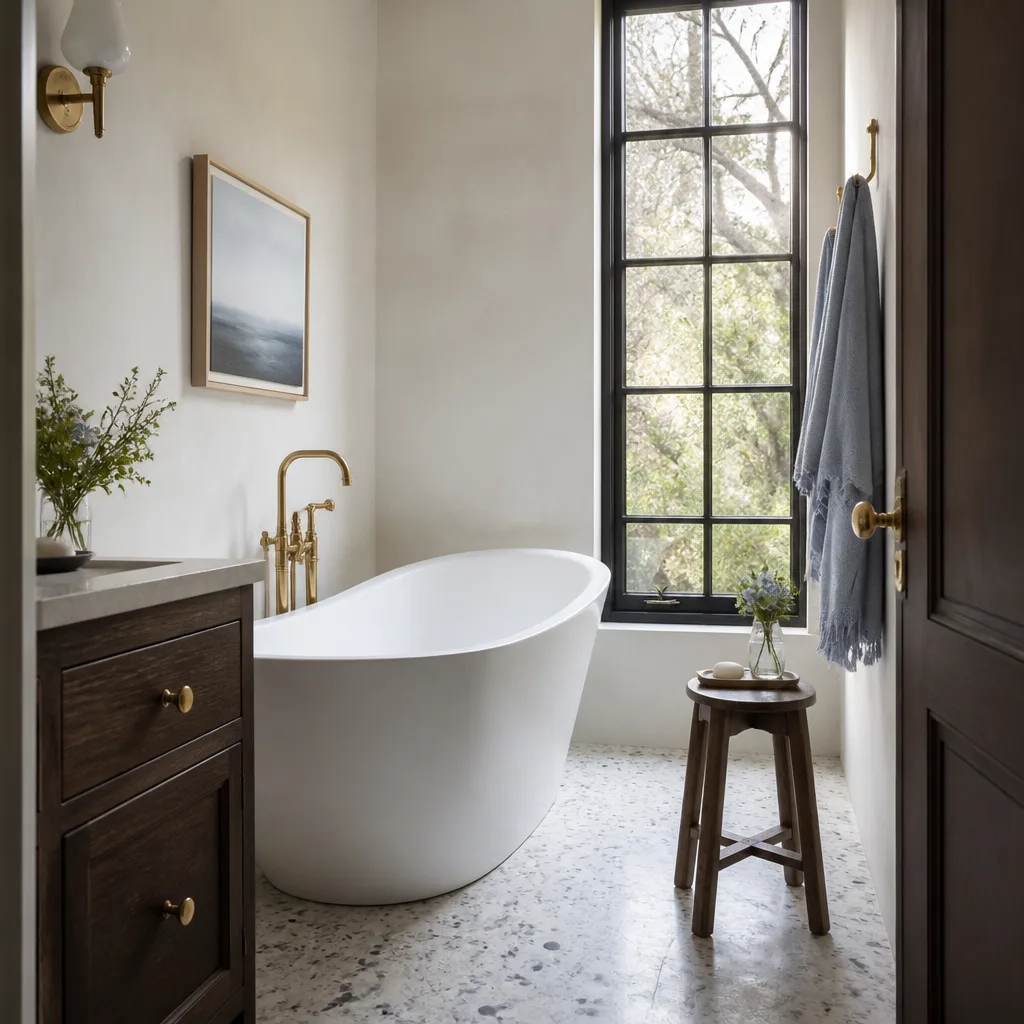
Full Bathroom Remodel (5’x8′, single sink, tub/shower combo)
- Demolition and debris hauling: $1,800 – $2,600
- Rough plumbing (replace supply lines and drain as needed): $2,800 – $5,500
- Rough electrical (GFCI circuits, lighting, exhaust fan): $1,200 – $2,100
- Drywall and cement board: $1,400 – $2,000
- Waterproofing system (Schluter Kerdi or equal): $800 – $1,500
- Tile labor and materials (shower surround and floor): $4,500 – $7,500
- Shower door and glass, if separate from tub: $900 – $2,200
- Fixtures (tub, toilet, vanity, faucet, lighting): $2,500 – $5,000
- Paint and finish work: $700 – $1,100
- Permits (as detailed above): $1,200 – $2,000
- Contractor overhead and profit (typically 15 – 20%): $3,800 – $6,500
Total: $22,000 – $38,000, with the midpoint around $28,000 for a straight replacement of a 5×8 bathroom with no layout changes.
Kitchen Remodel (150 sq ft, mid-grade, no structural changes)
- Demo and disposal: $2,500 – $4,000
- Rough plumbing (sink relocation costs extra): $2,000 – $4,000
- Rough electrical (code-compliant countertop circuits, lighting, appliance circuits): $2,500 – $5,500
- Cabinetry (semi-custom, 20 – 24 linear feet): $12,000 – $22,000
- Countertops (quartz, mid-grade slab): $4,500 – $8,000
- Tile backsplash (labor and material): $1,500 – $3,000
- Appliance rough-ins and installation: $800 – $1,500
- Flooring (tile or vinyl plank, 150 sq ft): $1,800 – $3,500
- Drywall, patch, paint: $2,000 – $3,500
- Permits: $1,800 – $3,200
- Overhead and profit: $7,000 – $12,000
Total: $45,000 – $85,000. A full kitchen with layout changes, structural work, or custom cabinetry pushes the top of the range higher. A galley kitchen refresh with all new surfaces but no configuration changes lands at the low end.
Room Addition (300 – 400 sq ft, simple bump-out)
- Foundation and slab: $12,000 – $18,000
- Framing and sheathing: $18,000 – $28,000
- Roofing (structure and shingle, integrated with existing roof): $9,000 – $14,000
- Exterior siding and stucco patch: $6,000 – $10,000
- Windows and exterior doors: $3,500 – $7,000
- Rough electrical and HVAC extension: $6,000 – $11,000
- Insulation and drywall: $5,000 – $8,000
- Flooring, trim, paint: $6,000 – $10,000
- Permits and plan check: $6,000 – $10,000
- Overhead and profit: $14,000 – $22,000
Total: $95,000 – $160,000. Room additions in Long Beach frequently hit obstacles in planning: setback requirements, floor-area ratio limits, and design review in historic districts like Bluff Park or Belmont Heights add 3 – 6 months of pre-construction work that national guides never mention.
ADU Conversion (detached garage to dwelling, 400 sq ft)
- Foundation retrofit and structural upgrade: $25,000 – $40,000
- Full plumbing rough-in (new sewer lateral often required): $15,000 – $28,000
- Full electrical service upgrade (100A to 200A panel, new circuits): $8,000 – $15,000
- Insulation, drywall, flooring, paint: $20,000 – $30,000
- Kitchenette and bathroom: $35,000 – $55,000
- Doors, windows, exterior finishes: $12,000 – $20,000
- Permits, plan check, and school impact fees: $15,000 – $25,000
- Overhead and profit: $30,000 – $50,000
Total: $180,000 – $320,000. ADU conversions in Long Beach have surged since the city streamlined its ADU ordinance, and contractor availability for this work is tight. The school impact fee alone runs $3 – $5 per square foot on new residential square footage in the Long Beach Unified School District boundary.
Hidden Costs in Older Long Beach Homes
Long Beach has more than 50,000 housing units built before 1970, concentrated in neighborhoods like Alamitos Beach, Rose Park, Wrigley, and North Long Beach. Those homes carry three cost drivers that generic remodeling guides ignore entirely, and they are the reason two identical bathroom remodels can be $15,000 apart.
- Cast iron drain replacement. Pre-1970 homes in Long Beach were typically plumbed with cast iron waste lines. Cast iron corrodes from the inside over decades, and by 2026 most of those original lines are 55 – 80 years old and near failure. When you open up a bathroom or kitchen in one of these homes, the plumber is going to recommend replacing the cast iron drain with ABS or PVC while the walls are open. That is $3,500 – $8,000 on a bathroom, $5,000 – $12,000 on a kitchen, and it is the right call: leaving 60-year-old cast iron behind new tile means cutting into that new tile in five years when the drain fails. A Bathroom Remodeling in Long Beach contractor who has worked in these older neighborhoods will flag this cost at the estimate stage, not after demo starts.
- Electrical panel upgrades. Current Long Beach building code requires AFCI protection on most remodeled rooms and GFCI on any circuit within six feet of a water source. Many 1950s – 1970s homes still run on 60A or 100A panels that cannot take new circuits without upgrading the service. A panel upgrade from 100A to 200A runs $3,000 – $6,500 in Long Beach, including permit and utility coordination with Southern California Edison. If your remodel adds a bathroom, kitchen, or ADU, a panel upgrade is likely required, not optional.
- Asbestos and lead abatement triggers. Homes built before 1978 may have asbestos in drywall texture, vinyl flooring, insulation, or old mastic adhesives. Homes built before 1978 also carry lead paint risk. The moment you disturb 50+ square feet of these materials, Long Beach building department and South Coast Air Quality Management District regulations require licensed abatement or at minimum lead-safe work practices. Asbestos testing runs $300 – $600. If abatement is needed: $2,500 – $9,000 depending on the material and area. This is a line item that never appears in a national cost guide and blindsides remodelers who skip the test.
The True Cost of the Cheapest Bid
When three bids for the same Long Beach bathroom remodel come in at $24,000, $28,000, and $16,000, the $16,000 one is not the bargain. It is a different project wearing the same description. Here is how a low-ball bid in Long Beach actually costs more than the honest one, and we have rebuilt enough of these projects to know the pattern.
- Change orders after the walls are open. The low bid omits cast iron replacement, panel upgrades, or waterproofing. Once demo is done, the contractor “discovers” the problem and issues a change order for $6,000 – $14,000. The homeowner has no leverage because the walls are open and the permit is pulled.
- Stretched timelines and unpaid progress. A bid that does not cover real labor costs forces the contractor to take other jobs to stay afloat. Your project becomes the filler job. A four-week bathroom becomes a four-month bathroom, and the extra holding costs, if you moved out, eat the savings.
- Rework from skipped steps. Skipping waterproofing behind tile, skipping the panel upgrade, skipping the plan check for structural work: these create failure points that cost two to three times more to fix after the fact than to do correctly the first time. A wall that gets wet behind a shower surround fails within two or three years, and the repair means tearing out tile that was just installed.
- Pulled permits never inspected. Some low-bid contractors pull the permit but never call for inspections, leaving the homeowner with an open permit that blocks a future sale. Long Beach requires all approved-permit work to have finaled inspections, and an open permit turns up in a title search and scares off buyers or lenders.
We’re not saying every low bid is dishonest. We’re saying a Long Beach remodel bid that is 40% below the next one is missing line items, not finding secret savings. When you call a company like Sawyer Remodel Long Beach home, the number you get is the number you pay. That is the Relay Standard, and it’s what the written price guarantee is for.
How to Read a Written Estimate
A written estimate should read like a recipe, not a menu. If it says “bathroom remodel – $24,500” with no further detail, you are buying a promise, not a project. Here is what a useful Long Beach remodel estimate includes, and what gets left out of the ones that blow up into disputes.
- Line-item labor and material breakdowns. Every phase of the project should be listed with a dollar figure: demo, rough plumbing, rough electrical, drywall, waterproofing, tile, fixtures, paint. If a contractor will not break out the line items, they’re hiding margin, and that margin becomes a negotiation tool against you later.
- Material allowances with named brands. “Tile allowance: $2.50/sq ft” is useless unless the labor is separated. “Tile allowance: $4,000 for material; Kohler or Moen fixture allowance: $2,800; cabinetry: KraftMaid semi-custom” is something you can price-check at a local supplier. Long Beach tile shops like those on Anaheim Street will quote you actual per-square-foot pricing so you can verify the allowance is realistic.
- Specific scope of work. “Demo existing bath to studs, dispose of debris, install Schluter Kerdi waterproofing system, set tile to industry standard, install Kohler fixtures per specification. Permit by others or permit by contractor, final inspection included.” The more specific the scope, the fewer the change orders.
- What is excluded. An honest estimate lists what it does not cover: “No allowance for asbestos abatement. No sewer lateral work. No relocating existing plumbing drains. No finish painting beyond nail holes in patched areas.” Most disputes on Long Beach remodels start with something the written estimate left out, not with something it included.
- Payment schedule tied to milestones. Long Beach contractors commonly ask for 10 – 30% down, with draws tied to phase completion (rough-in, drywall, tile, final). Never pay more than 30% before materials are on site and work has begun, and never allow a draw for work that hasn’t passed inspection.
Material Pricing: Where Long Beach Supply Chains Add Cost
Long Beach sits on one of the busiest port complexes in the world, which means materials generally arrive faster than they do inland. But that doesn’t mean cheaper. Freight drayage costs from the Port of Long Beach terminals to local suppliers add $150 – $400 per load, and local distributors carry higher warehouse costs than their counterparts in San Bernardino or Riverside. Coastal humidity also means materials need proper storage; you may pay a small premium for lumber that was not left out in salt air.
Some specifics that affect your budget:
- Lumber and framing: Long Beach prices run 10 – 15% above the national average for dimensional lumber, driven by port drayage and local yard overhead. A $25,000 framing package elsewhere is $27,500 – $28,750 here.
- Tile and stone: The concentration of importers in Long Beach and nearby Signal Hill means tile pricing is actually competitive. You can find Italian porcelain and Spanish ceramic at per-square-foot prices comparable to big-box stores, often from the same distributors.
- Windows and doors: Long Beach’s coastal wind zone and Title 24 energy code requirements push window costs up. A standard 36″x48″ retrofit window runs $400 – $700 in materials here, where the same window might be $300 – $500 in Nevada. Miles of exposure to ocean weather means glass packages tend toward the higher end: low-E, argon-filled, and sometimes impact-rated products from manufacturers like PGT, CGI, CWS, or ES Windows for coastal or hillside exposure.
- Roofing: GAF, CertainTeed, and Owens Corning all distribute through Long Beach yards, and pricing tracks national numbers closely. The variable is labor, not shingle cost, plus the city’s cool roof requirement on re-roofs of certain square footages.
How Long Projects Actually Take in Long Beach
Construction timelines in Long Beach run longer than national averages for two structural reasons: the permit process and the age of the housing stock.
- Permit approval timeline: Simple bathroom remodels often clear plan check in 2 – 4 weeks if the contractor submits complete drawings. Kitchen remodels with layout changes: 4 – 8 weeks. Room additions and ADUs: 8 – 14 weeks, longer if the property is in a historic district or coastal zone requiring extra review.
- Pre-construction inspection and material ordering: 2 – 4 weeks for most projects. Custom cabinetry from KraftMaid or Wellborn runs 8 – 12 weeks from order to delivery, and smart contractors order before demo so the cabinets arrive when the walls are ready.
- Actual construction time: A 5×8 bathroom replacement is 3 – 5 weeks of labor. A kitchen with layout changes runs 6 – 10 weeks. A room addition runs 4 – 6 months. An ADU conversion runs 5 – 8 months. These are working-day ranges, and Long Beach’s winter rainy season adds delays when the work is exterior or when drywall mud won’t cure in unheated garages.
The difference between a 4-week bathroom and a 4-month bathroom usually comes down to planning, not crew size. Work that is sequenced correctly, with materials order dates set before demo day, finishes faster and costs less.
Common Mistakes to Avoid
- Budgeting off national averages. Long Beach labor runs 18 – 25% above the national median. A national guide’s “$25,000 bathroom” is a “$28,000 – $32,000 bathroom” here before you even account for permit fees.
- Ignoring permit costs. The permit and plan check fees run $1,200 – $2,000 on a bathroom, $6,000 – $10,000 on a room addition. Homeowners who skip permits to “save money” later face a stop-work order, a doubled fee, and trouble selling the house with unpermitted work on record.
- Choosing the lowest bid without comparing line items. If one bid is 40% below the others, it’s missing scope. Compare the line items, not the bottom line.
- Assuming the pre-1980 home is clean. Cast iron drains, insufficient electrical panels, and asbestos are common in Long Beach’s mid-century housing stock. Budget for testing and possible replacement before you commit.
- Starting work before permits are approved. In Long Beach, construction without an issued permit triggers a code enforcement case, and the contractor can have their license actioned by the Contractors State License Board. Do not let anyone start demo before the permit is in hand.
- Paying large deposits before materials are on site. A 50% deposit with nothing delivered is how homeowners end up chasing a contractor. Long Beach standard is 10 – 30% down, with draws tied to progress.
- Not getting the written guarantee. A one-year workmanship guarantee on a $30,000 remodel is standard practice; if it’s not in writing, it’s not enforceable. The 365-Day Done Right Promise is not a phone call, it’s a contract clause.
See the difference
 Before
 After
After Before
 After
After Before
 After
AfterWhen to Call a Professional
You do not need a general contractor to replace a faucet or paint a room. You do need one when the work touches structure, plumbing drains, electrical circuits, or waterproofing. If your project requires a permit (which it does for any bathroom, kitchen, addition, or ADU in Long Beach), it requires a licensed professional who stands behind the work. Structural changes, drain line replacement, panel upgrades, and any work on pre-1980 homes with potential asbestos or lead paint are professional territory, not weekend projects.
Sawyer Remodel Long Beach offers free estimates in Long Beach. Call (562) 512-6480 and you will get a written line-item price before any work starts, with the Relay Visibility Guarantee behind it: live arrival time, photo updates before and after, and a price that does not change at the door.
Frequently Asked Questions
A mid-grade full bathroom remodel in Long Beach in 2026 runs $22,000 – $38,000 depending on size, existing conditions, and whether you move plumbing. A straight 5×8 replacement with no layout changes and mid-grade fixtures lands around $28,000 including permits. Call (562) 512-6480 for an exact quote on your specific bathroom. Estimates are free.
Long Beach permit fees scale with project valuation and typically run 3 – 6% of the project cost. A $30,000 bathroom remodel carries about $1,200 – $2,000 in permit and plan check fees; a $120,000 whole-home renovation runs $4,800 – $8,400. Plan check fees are a separate charge and typically equal 65 – 75% of the building permit amount.
Long Beach labor rates run 18 – 25% above the national average due to higher workers’ compensation insurance costs, coastal California wage competition, and a tight market for licensed plumbers and electricians. Older housing stock also adds scope: cast iron drain replacement, electrical panel upgrades, and asbestos testing are common requirements that national cost guides do not account for.
A bathroom replacement takes 3 – 5 weeks of construction plus 2 – 4 weeks for permits. A kitchen with layout changes runs 6 – 10 weeks plus 4 – 8 weeks of plan check. Room additions and ADUs run 4 – 8 months including permitting. The single biggest timeline variable is whether the contractor submitted complete plans the first time and ordered materials before demo started.
Yes. Any bathroom or kitchen remodel that alters plumbing, electrical, or walls requires a building permit and separate trade permits in Long Beach. Working without a permit can trigger a stop-work order, doubled fees, and a code enforcement case that shows up when you sell the house. A licensed contractor pulls permits and schedules inspections as part of the job.
It should not, if the estimate was written properly. An honest written estimate includes the cost of replacing cast iron drains, upgrading the electrical panel, and testing for asbestos before demo starts. When a contractor writes those line items into the original estimate, the price does not move. The Sawyer Remodel Long Beach written price means the number on the estimate is the number on the invoice.
The Bottom Line
Long Beach remodeling costs in 2026 are predictable if you plan for the right numbers: labor at $65 – $95 per hour, permits at 3 – 6% of project valuation, and older-home upgrades like cast iron replacement, panel work, and abatement as expected line items, not surprises. A mid-grade bathroom runs $22,000 – $38,000; a kitchen $45,000 – $85,000; an ADU $180,000 – $320,000. The written estimate is your first line of defense: if it doesn’t have line items, it’s not a real bid. If it does, and it’s priced right, the project will finish close to the number you approved. That is the point of the entire system, and it is how Sawyer Remodel Long Beach has operated since 2005.
Written by Luca Romano, Owner at Sawyer Remodel Long Beach, serving Long Beach since 2005.


